 Image 1 of 2
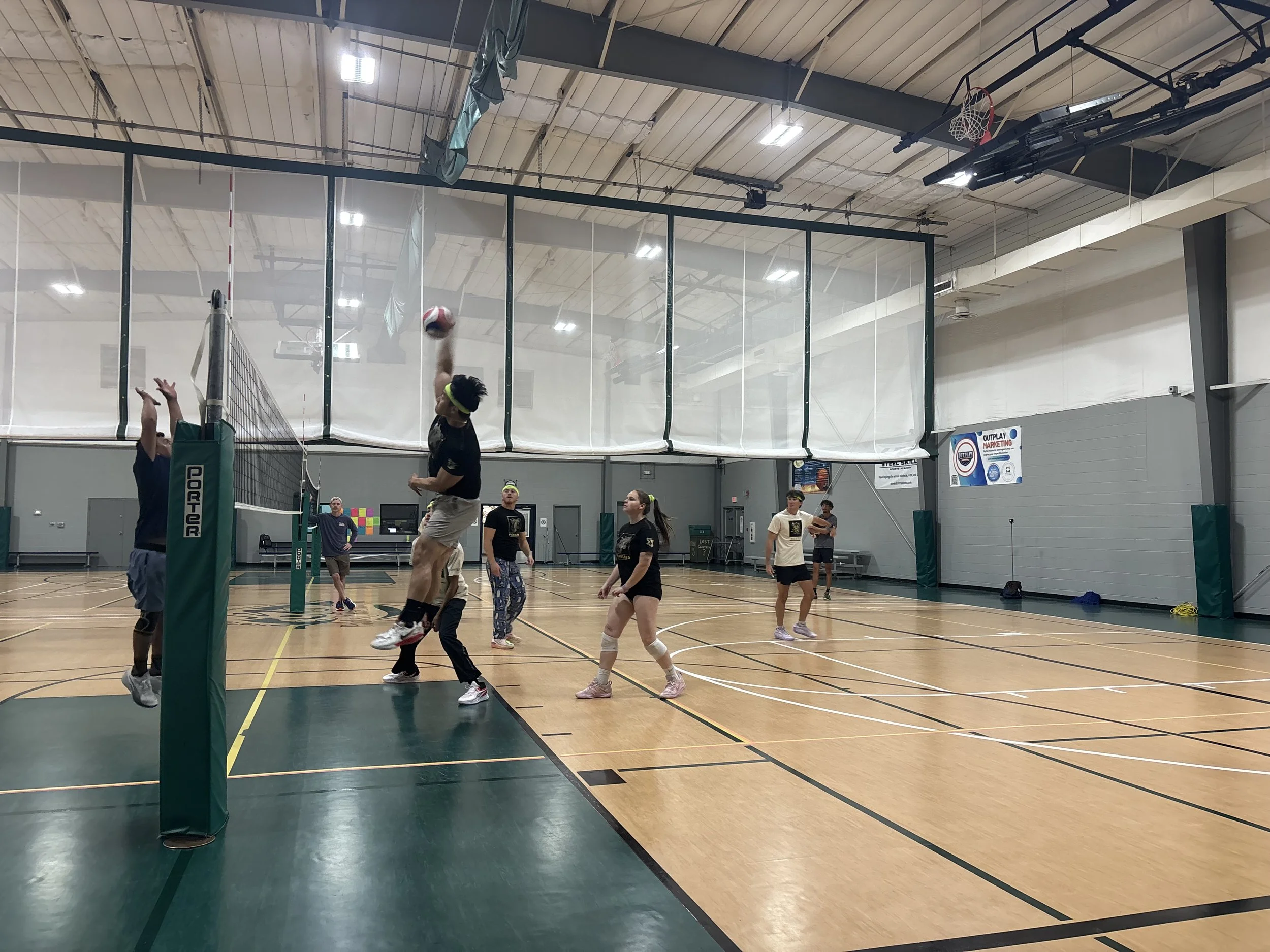 Image 2 of 2
Volleyball Serving ,Blocking & Spiking Lessons
60‑Minute Volleyball Training Session — Foundation for Blocking, Serving, and Jump Serving
Warm‑Up (10 minutes)
Dynamic mobility (4 minutes): leg swings (front and side) 10 each leg, walking lunges 10 steps, inchworms 6, hip circles 10 each side.
Activation & plyometrics (6 minutes): 3 sets — 8 quick feet shuffles (20 ft), 6 tuck jumps, 8 lateral bounds (4 each direction). Rest 30 seconds between sets.
Technical Blocks & Footwork (15 minutes)
Block footwork ladder (5 minutes): cone ladder or tape marks. Single step to closed block, hop‑step approach, mirror partner or coach cues. 4 reps each side, focus on timing and quick plant.
Block timing drill (6 minutes): coach/partner tosses attacker approach without ball; blocker practices read, reach, and penetration over net. 6 reps each side; emphasize shoulders over net and hands into opponent’s court.
Block recovery & transition (4 minutes): block, then immediately pivot and take two approach steps for a quick back‑row position or transition to serve receive. 6 reps each side.
Serving Mechanics & Consistency (15 minutes)
Serving fundamentals review (2 minutes): stance, toss, arm swing path, contact point.
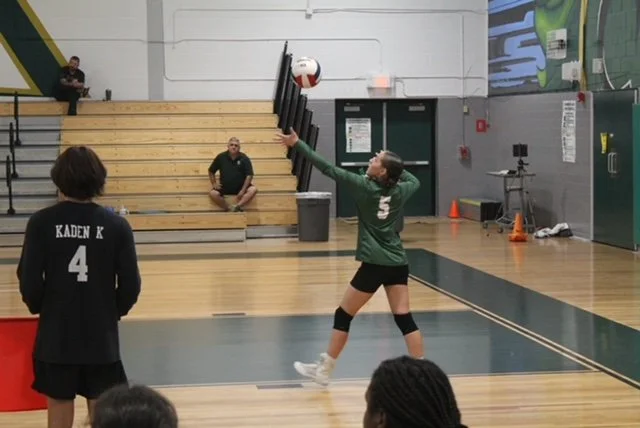
Targeted float serve (6 minutes): 3 zones on court (deep, short, wide). 8 serves per zone; rest 30 seconds between sets. Focus on low, controlled toss and firm wrist to minimize spin.
Power jump serve progression (7 minutes):
Step 1 (2 minutes): static jump toss without ball — practice toss height and arm swing timing (6 reps).
Step 2 (3 minutes): standing toss + small jump, contact with non‑spiking approach — 8 reps, focus on explosive hips and full extension.
Step 3 (2 minutes): 6 full jump serves aiming for a zone. Emphasize consistent toss, snap at contact, and controlled landing.
Serve‑Receive & Immediate Block Read (8 minutes)
Serve‑receive to block transition drill (8 minutes): three servers rotate serving to the passing team. After pass and quick set to pin dummy or coach toss, nearest blocker reads setter’s body and moves to block or retreat. 6 rotations, focus on first contact accuracy and immediate block decision.
Jump Serve Conditioning & Strength Circuit (7 minutes)
3 rounds, 40 seconds work / 20 seconds rest:
Round move A: medicine ball overhead throws (explosive hip drive) or slam (if available).
Round move B: single‑leg Romanian deadlift (bodyweight or light DB) 20 seconds each leg.
Round move C: lateral bounds for distance.
Purpose: build explosive hip extension and single‑leg stability needed for jump serving and blocking.
Cool‑Down & Mobility (5 minutes)
Light jog and static stretching: hamstrings, quads, calves, hip flexors, glutes — 30 seconds each.
Shoulder mobility: banded pull‑aparts or arm circles — 60 seconds.
Short mental reset: 60 seconds of breathing and visualizing clean serve toss and strong block penetration.
Coaching Cues & Progressions
Blocking: always reach with palms angled slightly down; think “penetrate the plane” not just jump high. Eyes on setter’s shoulders and hitter’s last step.
Serving: toss is the serve — if toss is off, reset. For jump serve, toss slightly forward of hitting shoulder and consistent height.
Transition: practice quick read after serve or pass — split second decision makes or breaks block success.
Progressions: increase serving distance pressures, add live hitters for blocking timing, and introduce fatigued jump serve sets to simulate late‑game conditions.
Equipment Needed
Ball cart or multiple balls, cones, medicine ball or slam ball, light dumbbells or kettlebell (optional), resistance band, tape or ladder for footwork.
Notes for Coaches
Monitor toss consistency first; 70% good tosses before ramping up to full jump serves.
Emphasize quality over quantity — clean technical reps beat sloppy high‑rep attempts.
Scale intensity for age and experience: replace jump serves with standing power serves for younger or developing athletes.
End goal: build a stable technical foundation for blocking near or away from the net and develop repeatable float and jump‑serve mechanics while improving the explosive strength and single‑leg stability that power those skills.
60‑Minute Volleyball Training Session — Foundation for Blocking, Serving, and Jump Serving
Warm‑Up (10 minutes)
Dynamic mobility (4 minutes): leg swings (front and side) 10 each leg, walking lunges 10 steps, inchworms 6, hip circles 10 each side.
Activation & plyometrics (6 minutes): 3 sets — 8 quick feet shuffles (20 ft), 6 tuck jumps, 8 lateral bounds (4 each direction). Rest 30 seconds between sets.
Technical Blocks & Footwork (15 minutes)
Block footwork ladder (5 minutes): cone ladder or tape marks. Single step to closed block, hop‑step approach, mirror partner or coach cues. 4 reps each side, focus on timing and quick plant.
Block timing drill (6 minutes): coach/partner tosses attacker approach without ball; blocker practices read, reach, and penetration over net. 6 reps each side; emphasize shoulders over net and hands into opponent’s court.
Block recovery & transition (4 minutes): block, then immediately pivot and take two approach steps for a quick back‑row position or transition to serve receive. 6 reps each side.
Serving Mechanics & Consistency (15 minutes)
Serving fundamentals review (2 minutes): stance, toss, arm swing path, contact point.
Targeted float serve (6 minutes): 3 zones on court (deep, short, wide). 8 serves per zone; rest 30 seconds between sets. Focus on low, controlled toss and firm wrist to minimize spin.
Power jump serve progression (7 minutes):
Step 1 (2 minutes): static jump toss without ball — practice toss height and arm swing timing (6 reps).
Step 2 (3 minutes): standing toss + small jump, contact with non‑spiking approach — 8 reps, focus on explosive hips and full extension.
Step 3 (2 minutes): 6 full jump serves aiming for a zone. Emphasize consistent toss, snap at contact, and controlled landing.
Serve‑Receive & Immediate Block Read (8 minutes)
Serve‑receive to block transition drill (8 minutes): three servers rotate serving to the passing team. After pass and quick set to pin dummy or coach toss, nearest blocker reads setter’s body and moves to block or retreat. 6 rotations, focus on first contact accuracy and immediate block decision.
Jump Serve Conditioning & Strength Circuit (7 minutes)
3 rounds, 40 seconds work / 20 seconds rest:
Round move A: medicine ball overhead throws (explosive hip drive) or slam (if available).
Round move B: single‑leg Romanian deadlift (bodyweight or light DB) 20 seconds each leg.
Round move C: lateral bounds for distance.
Purpose: build explosive hip extension and single‑leg stability needed for jump serving and blocking.
Cool‑Down & Mobility (5 minutes)
Light jog and static stretching: hamstrings, quads, calves, hip flexors, glutes — 30 seconds each.
Shoulder mobility: banded pull‑aparts or arm circles — 60 seconds.
Short mental reset: 60 seconds of breathing and visualizing clean serve toss and strong block penetration.
Coaching Cues & Progressions
Blocking: always reach with palms angled slightly down; think “penetrate the plane” not just jump high. Eyes on setter’s shoulders and hitter’s last step.
Serving: toss is the serve — if toss is off, reset. For jump serve, toss slightly forward of hitting shoulder and consistent height.
Transition: practice quick read after serve or pass — split second decision makes or breaks block success.
Progressions: increase serving distance pressures, add live hitters for blocking timing, and introduce fatigued jump serve sets to simulate late‑game conditions.
Equipment Needed
Ball cart or multiple balls, cones, medicine ball or slam ball, light dumbbells or kettlebell (optional), resistance band, tape or ladder for footwork.
Notes for Coaches
Monitor toss consistency first; 70% good tosses before ramping up to full jump serves.
Emphasize quality over quantity — clean technical reps beat sloppy high‑rep attempts.
Scale intensity for age and experience: replace jump serves with standing power serves for younger or developing athletes.
End goal: build a stable technical foundation for blocking near or away from the net and develop repeatable float and jump‑serve mechanics while improving the explosive strength and single‑leg stability that power those skills.